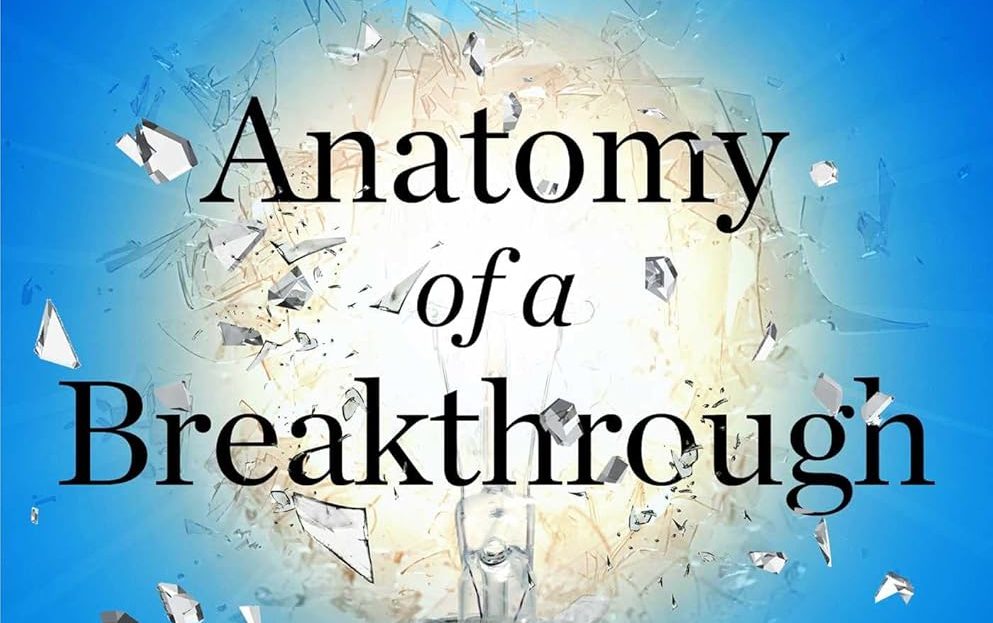
I read The Anatomy of a Breakthrough on the plane home from Portugal.
It wasn’t a casual read. It was the kind of book that quietly reorganises how you think especially if you’ve felt capable, driven, and still stuck.
Adam Alter doesn’t frame breakthroughs as moments of inspiration or heroic effort. He treats them like systems problems. And that’s exactly why the book works.
This post isn’t a summary.
It’s the actual framework from the book—distilled, practical, and applied.
The central idea
Breakthroughs don’t come from trying harder.
They come from removing friction.
Most people are stuck not because they lack motivation or talent, but because invisible forces are slowing them down—emotionally, cognitively, and behaviorally.
Alter’s framework is built around identifying and eliminating those forces.
He calls this process a Friction Audit.
The Breakthrough Framework
At the core of the book is a simple but powerful structure:
Friction lives in three places:
- Heart (emotional friction)
- Head (cognitive friction)
- Habit (behavioral friction)
A breakthrough happens when you address all three—systematically.
Not at once. Not perfectly. But deliberately.
1. Heart: Emotional friction
This is the friction we don’t like to admit exists.
It shows up as:
- Fear of failure
- Fear of judgment
- Anxiety about uncertainty
- Discomfort with starting before you’re ready
Most people try to “push through” these emotions.
Alter argues that doesn’t work.
Instead, breakthroughs require acknowledging emotional resistance, not eliminating it. When you name fear or discomfort, it loses its ability to quietly control your decisions.
Key idea:
Emotional friction doesn’t disappear when ignored. It disappears when understood.
Breakthroughs begin when you stop asking, “How do I get rid of this feeling?”
And start asking, “What is this feeling protecting me from?”
2. Head: Cognitive friction
This is the friction of thinking.
It includes:
- Overthinking
- Perfectionism
- Analysis paralysis
- Rigid mental models
- Trying to solve new problems with old frameworks
Cognitive friction keeps people stuck because it creates the illusion of progress. You feel busy, thoughtful, prepared—but nothing actually changes.
Alter’s solution isn’t “think more.”
It’s think differently.
That often means:
- Simplifying the problem
- Reframing the question
- Breaking large goals into smaller, concrete decisions
- Recombining existing ideas instead of chasing novel ones
One of the most practical lessons here is that clarity often follows action, not the other way around.
If you’re waiting to feel ready, you’re thinking too much.
3. Habit: Behavioral friction
This is where most breakthroughs die.
Even when people understand their emotions and think clearly, their routines quietly pull them back to the status quo.
Behavioral friction looks like:
- Default schedules
- Familiar environments
- Comfortable but misaligned habits
- Too many options and escape hatches
Alter emphasizes that breakthroughs require movement—even imperfect movement.
You don’t need the perfect plan.
You need a behavior that creates momentum.
Key idea:
Action is often the cause of motivation, not the result of it.
Breakthroughs follow behavior changes that are small, repeatable, and uncomfortable enough to matter.
The Friction Audit (the practical tool)
Here’s the tool the book keeps coming back to.
When you feel stuck, ask:
- Heart:
What emotion am I avoiding right now? - Head:
Where am I overcomplicating this? - Habit:
What daily behavior is reinforcing my current plateau?
Then ask the more important question:
What can I remove—not add—to reduce friction?
This is where the book is quietly radical.
Most advice tells you to add:
- More goals
- More discipline
- More tools
Alter suggests breakthroughs usually come from subtraction:
- Fewer options
- Clearer constraints
- Tighter environments
- Reduced escape routes
Constraints create breakthroughs
One of the strongest ideas in the book is that constraints are not limitations—they’re catalysts.
People and teams break through when they:
- Remove optionality
- Create artificial deadlines
- Change environments
- Force decisions they’ve been postponing
The biggest changes in my own life and work didn’t come from freedom.
They came from committing before I felt ready.
Why this framework matters
What makes The Anatomy of a Breakthrough different is that it doesn’t rely on motivation.
Motivation fades.
Systems don’t.
This framework works because it:
- Treats stuckness as structural, not personal
- Respects human psychology instead of fighting it
- Focuses on leverage points instead of brute force
It’s not about becoming a new person.
It’s about changing the conditions around you.
The question I left the plane with
As we landed, I wrote one line in my notes:
“What constraint, if I introduced it now, would force a breakthrough?”
Not a goal.
Not a vision.
A constraint.
That question has stayed with me longer than most advice ever does.
Who this book is for
Read this if:
- You feel capable but stalled
- You’ve tried discipline and it didn’t stick
- You want progress without burnout
- You’re ready to redesign the system instead of blaming yourself
Skip it if you want hacks or hype.
This is a book for people who want real movement, not temporary motivation.
Breakthroughs rarely feel like breakthroughs at first.
They usually start as friction you stop avoiding.
This book shows you how to use that friction on purpose.

Leave a comment